


Leveling feet carry the full weight of a machine and keep it stable, level and in place. In food production they must also be hygienic, which means no exposed threads, no gaps where dirt can collect and materials that withstand cleaning. Choosing the right foot starts with the load, but it does not end there.
Start with the real load
The total weight of the machine is only the starting point. To find the load per foot, consider:
- Uneven distribution: heavy motors, tanks or product buffers rarely sit in the middle of the frame.
- Dynamic loads: vibrations, start-stop cycles and moving parts add forces on top of the static weight.
- Uneven floors: if the floor is not flat, fewer feet may carry the load for a period.
- Safety margin: a margin protects against all of the above and against future changes to the machine.
A sound approach is to calculate the load per foot under the least favourable distribution and then add a margin before comparing with the rated load on the datasheet.
Static and dynamic ratings
Datasheets often state a static load, which is what the foot carries when nothing moves. Machines with vibrations or impacts need a foot rated for those conditions, or a larger margin. If the datasheet does not distinguish, ask the supplier.
What makes a leveling foot hygienic?
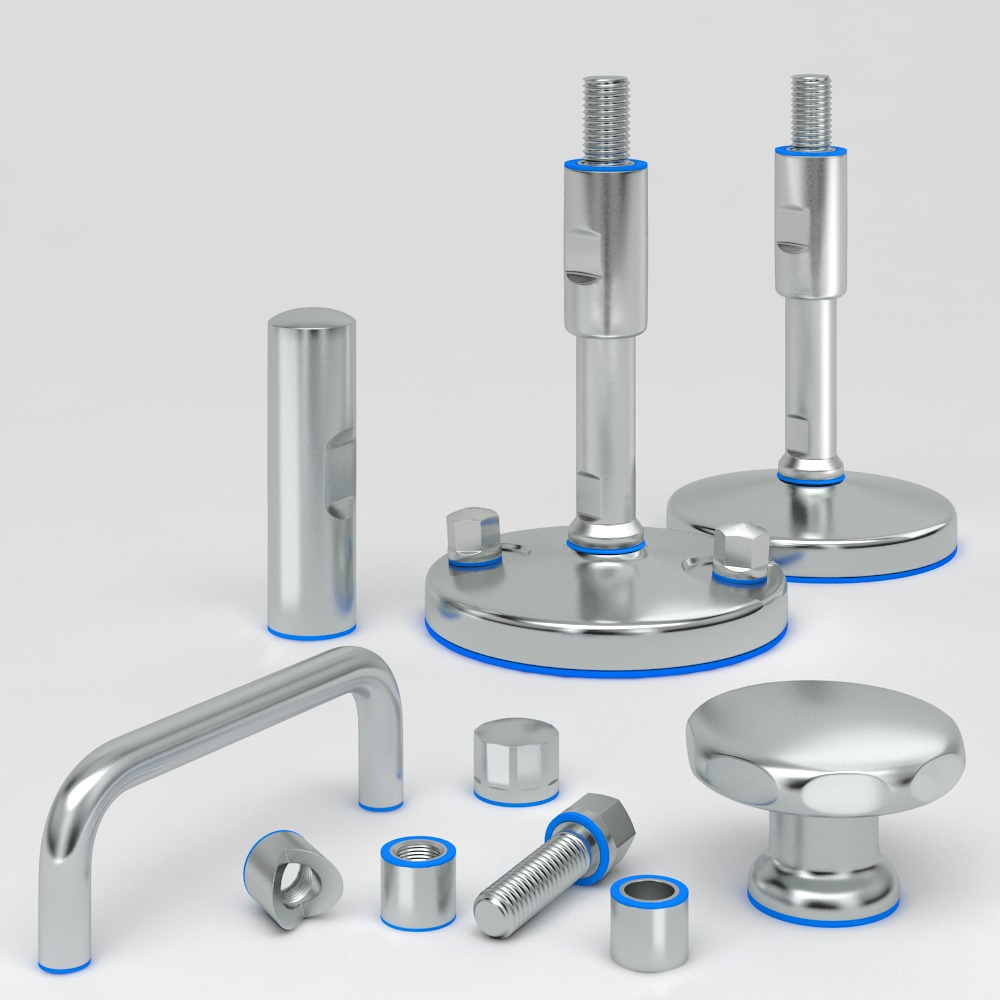
A standard leveling foot has an exposed thread and a gap between the base and the floor. Both are classic hiding places for bacteria. Hygienic designs remove those weak points:
- The thread is enclosed or covered, so it cannot collect dirt.
- The base seals against the floor with an approved elastomer, leaving no open gap.
- Surfaces are smooth and rounded so water runs off.
- Materials are stainless steel and food-contact approved polymers.
The practical benefits of hygienic stainless leveling feet show up in daily cleaning, where fewer hidden areas mean shorter cleaning time and lower risk of findings in audits.
Floor conditions and fixing
Wet, sloping floors with drains are common in food plants. Feet should allow enough height adjustment to compensate for slopes and still leave space to clean under the machine. Where machines vibrate or must withstand external forces, floor-fixed feet prevent creeping. Make sure the fixing method does not create new gaps that are hard to clean.
Documentation
For feet in food production zones, certification of hygienic design and food-contact compliance of the materials saves time in audits. Reviewing the EHEDG and 3-A certificates for NHK’s feet shows the level of documentation worth expecting from a supplier.
Installation and adjustment
Even a well-chosen foot only works if it is installed correctly. Place the machine, adjust all feet so that each one carries load, and only then level the frame. A foot that does not touch the floor contributes nothing, while its neighbours take more than planned. Lock the set height with the locking nut or the mechanism provided, and check the adjustment again after the first weeks of operation, because floors and frames settle. Keep spindle extension as short as possible to avoid a lever effect, and avoid using feet as lifting points or adjustment tools for other purposes. Finally, record the foot type and setting so that replacements are identical and the machine stays level after maintenance.
Frequently asked questions
How many feet does a machine need?
Enough to distribute the load safely and keep the frame stiff. Long frames often need intermediate feet to prevent sagging.
Can I use a lower-rated foot if I add more feet?
In theory, but on uneven floors not all feet will carry equally. Calculate with that in mind.
Do hygienic feet cost more?
Usually yes, but the reduced cleaning time and lower contamination risk generally outweigh the price difference.
Summary
Calculate the real load per foot, add a margin, and then choose a design that is hygienic, adjustable and documented. That combination keeps machines stable and plants clean.